Registration Status History in scoreio: A Transparent Audit of Changes
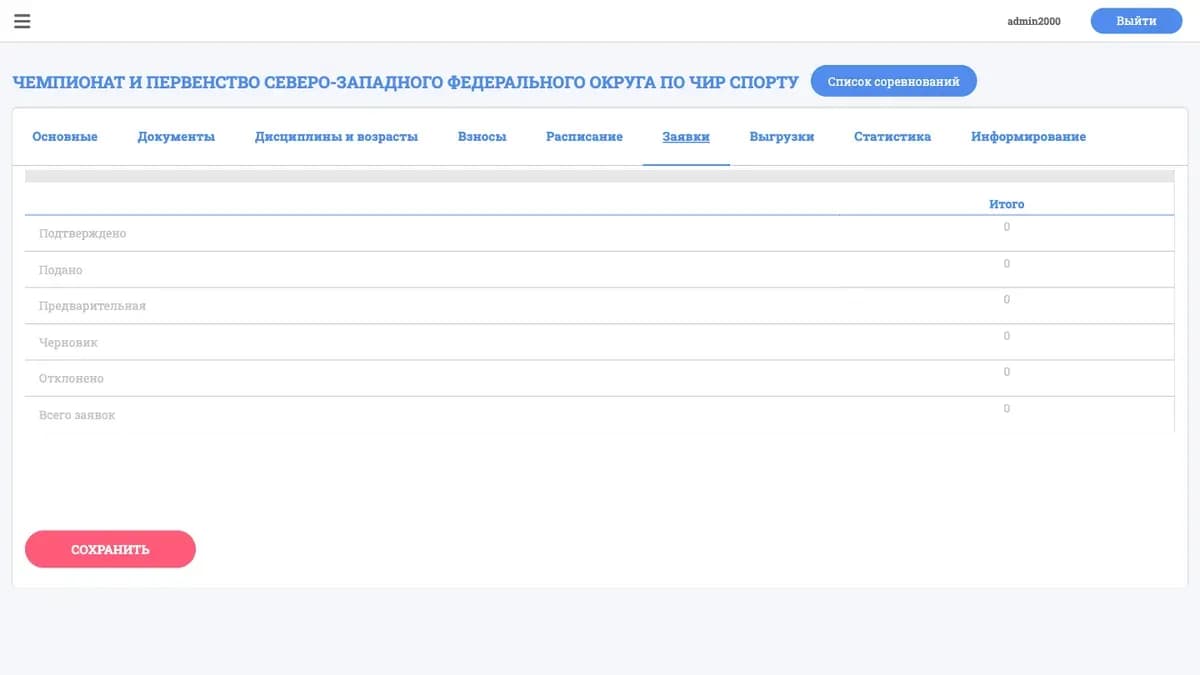
"We definitely registered for this division," "nothing was changed for us," "the status was different" — disputes about what happened to a registration and when drain a committee's time and nerves. As long as status changes are recorded nowhere, any disagreement turns into one person's word against another's. We removed this source of conflict: scoreio now keeps a registration status history — a log that shows who moved each registration to which status, and when.
How it used to be
A registration travels from submission to final decision through several states: accepted, sent back for revision, confirmed, rejected. At every step someone on the committee makes a decision and changes the status. But the fact of the change was saved nowhere — the system showed only the registration's current state, not how it got there.
Because of this, context was lost. If a registration's status turned out different from what a team expected, there was nothing to reconstruct the picture with: it was unclear when the change happened and who made it. When several people work on intake, finding the answer to "who moved this registration to this status?" became nearly impossible.
The lack of history hit on two fronts at once. Externally — disputes with teams that couldn't be settled with facts. Internally — no audit of the committee's own work: a mistake can't be traced, which means its recurrence can't be prevented.
What changed

We added a status change log. Now every move of a registration from one state to another is recorded as a separate history entry.
A full record of the change
Each log entry records not just "the status changed" but the full context of the event: competition, team, division, age group, level, the new status and the date of the change. It's not an abstract mark but a precise tie to a specific registration in a specific category.
A timeline instead of a snapshot
Before, only the current point was visible; now the whole path is. A registration stops being a "black box with one status" and becomes a transparent sequence of events: here's when it was accepted, here's when it was sent back for revision, here's when it was confirmed.
A tie to registration details
Because the entry stores the division, age group and level, the history is precise even where one team is registered in several categories at once. You see not just "something changed for the team" but exactly what changed and in which of its registrations.
What this gives you

- Fewer disputes. Disagreements with teams are settled with facts: the log shows when and to which status a registration moved, not a retelling from memory.
- A transparent audit. The committee's work becomes traceable — it's clear who made which change and when.
- Context for review. If something went wrong, there's a timeline to reconstruct and understand the sequence of events.
- Precision by category. The history is tied to division, age group and level — no confusion when a team has several registrations.
- Trust in the process. A transparent history raises teams' trust: they see decisions are recorded rather than made "in the dark."
Scenarios where this solves the problem
A status dispute before the start. A team is sure its registration was confirmed, but the system shows a different status. Instead of arguing over "who's right," the committee opens the registration's history and sees the timeline: when and to which status it moved. The conversation shifts from emotion to facts.
Several people handling intake. When a team works on intake, it matters to know who made which decision. The change log makes the work transparent: every status change is recorded with a date, and a disputed situation can be sorted out from the records rather than from colleagues' memory.
A team in several divisions. One squad is registered in several categories, and the statuses of those registrations differ. Thanks to the entry being tied to division, age group and level, the history shows changes precisely for the right registration, without mixing them up.
Frequently asked questions
What exactly does the status history record? Every change of a registration's status with context: competition, team, division, age group, level, the new status and the date.
Can I see a registration's whole path, not just its current status? Yes. The log stores the timeline of transitions, so the registration's whole path from submission to final state is visible.
Does this help in disputes with teams? Yes. Disagreements are settled with facts from the log — you can see when and to which status a registration moved, without relying on memory.
What if a team is registered in several categories? The entry is tied to division, age group and level, so the history is precise for each registration separately.
Why does the committee itself need this? It's an audit of its own work: the sequence of changes is visible, which helps review mistakes and avoid repeating them.
How to get started
Registration status history is about transparency and trust. A registration stops being a snapshot with one current state and becomes a clear timeline of events, tied to a specific division and category. Disputes are settled with facts, the committee's work becomes traceable, and teams see that decisions on their registrations are recorded honestly and precisely.
The status history pairs well with the notifications center: the team learns about a change on time, and the log keeps a record of what happened and when. Together with fee tracking and payment types, this makes a registration's whole path — from submission to payment and final status — fully transparent.
Want to see the full change history for every registration? Request a demo or a pilot run of scoreio — we'll show you how the status log removes disputes with teams and makes the committee's work transparent.