Registration archive: participation history that isn't lost and works as a template
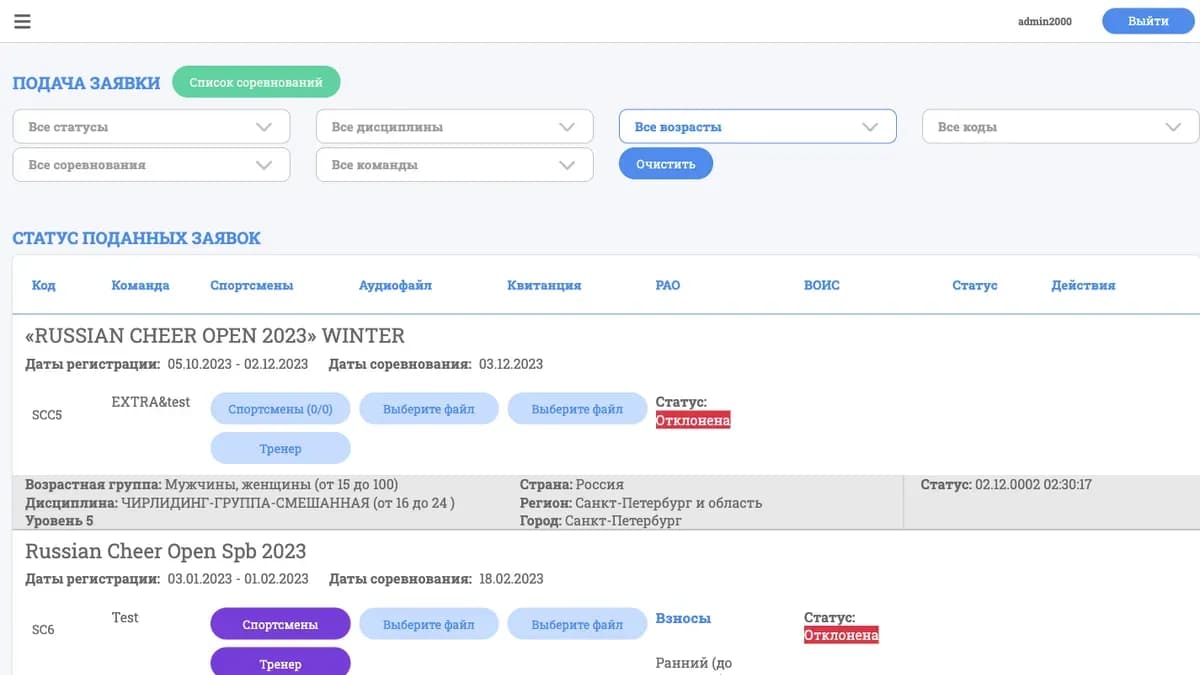
A competition registration isn't a one-off scrap of paper you throw away after the event. It holds the team roster, the coaches, the categories — all the details you painstakingly gathered. But it used to dissolve once the event ended: the registration list lived "here and now," and past entries slipped out of view. We fixed that. scoreio now has a registration archive: the history of submitted entries is preserved and stays available, outdated ones can be moved to the archive, and past registrations reused as a ready template.
How it used to be
A registration's life ended with the competition. The event was over, and the registration list became dead weight: it cluttered the view of current events, yet deleting it felt wrong because it held all the history. Organizers and teams were caught between two fires — a cluttered working list where new entries drown among last year's, or lost history.
And history is needed constantly. A team competes in the same series year after year, and each time the roster is re-entered even though it barely changed. A dispute arises — "did we even register last season, and with what roster?" — and there's no answer, because past entries aren't recorded anywhere as an available archive. Any audit, any continuity, rested on someone's memory and personal files.
It's especially galling to lose exactly the work that cost the most. Assembling a roster for a major event isn't five minutes: agree the athletes, check the data, lay out the categories, add the coaches. When all of that simply disappears from view after the competition, next time you have to repeat the same painstaking work from scratch. The platform effectively forgot what a person did by hand and made them do it again.
There was a flip side too — clutter. Organizers who on principle deleted nothing eventually drowned in their own list: finished events and old registrations mixed with current ones, and to find what you need "now" you had to wade through "once upon a time." It was a choice with no good option: either lose history, or accept that your workspace is jammed with the past.
What changed

We added a registration archive. Submitted registrations no longer vanish: their history is preserved and available, and outdated entries can be moved to the archive — clearing the working list of clutter while losing nothing.
Registration history is preserved
The key change is that a submitted registration stays in the system as part of history. Past entries aren't wiped along with a finished competition — you can return to them. This turns scattered events into a continuous record of participation that's always at hand.
Archiving the outdated
To keep the working list from sprawling, outdated registrations can be moved to the archive. They don't disappear — they simply stop getting in the way of current work. Active events stay in view, while everything already played out is neatly tucked into the archive and available when needed. This removes the old dilemma of "delete or clutter."
A past registration as a template
Since history is available, a past registration can serve as the basis for a new one. Instead of entering the roster, coaches, and details from scratch every time, you build on a previously submitted registration and edit only what changed. For teams that compete season after season with almost the same roster, this saves the most tedious part of preparation.
The value here is not only speed but accuracy. When the roster is carried over from a verified past registration, there's less chance of a new typo or a missed person: you edit already vetted data rather than re-entering everything at risk of error. Preparing for an event turns from "assemble it all from scratch" into "update what changed" — a completely different amount of work and a completely different level of peace of mind.
An archive, not a trash bin
It's important to understand the difference between archiving and deleting. Deleting is about "throw away forever." Archiving is about "out of sight but kept." An outdated registration sent to the archive isn't destroyed: it stays part of history and is available at any moment — as a reference, as proof of participation, as a starting point for re-submission. This is exactly what turns the old dilemma "delete or clutter" into a calm third option.
What this gives you

- History isn't lost. Submitted registrations are preserved and stay available — past competitions are always at hand.
- A clean working list. Outdated registrations move to the archive, and new entries don't drown among last year's.
- Fast re-submission. A past registration works as a template: you edit only the changes instead of entering the roster anew.
- Audit and transparency. It's always clear who competed before and with what roster — without relying on someone's memory.
- Series continuity. Participation history across stages is gathered in one place rather than scattered across files.
Scenarios where this solves the problem
A team competes in a series season after season. Almost the same roster, the same coaches, the same categories. Instead of filling in the registration anew at each stage, you take the past one as a template and change only what differs. Preparing for a new event takes minutes, not an evening.
An organizer needs order in the list. Over a couple of years, dozens of finished events and hundreds of registrations have piled up. To keep them from getting in the way of current work, outdated registrations move to the archive — the working list is clean again, while the history is fully preserved and available.
A dispute about past participation. A question comes up: did the team register last season, and with what roster? Instead of guessing, you open the archive and look at the actual history of submitted registrations — the question is closed by fact, not recollection.
Handover within a club or committee. The person who handled registrations changed — and usually all the "history in their head" and personal files leave with them. When the history of submitted registrations is stored in the platform, the successor doesn't start from a blank page: they see how and with what roster the team competed before, and pick up the work without losing context. The knowledge stays in the system rather than walking out with an employee.
Frequently asked questions
Are registrations deleted after a competition? No. The history of submitted registrations is preserved and stays available. A finished event doesn't wipe the registrations tied to it.
How is archiving different from deleting? Archiving removes an outdated registration from the working list but doesn't destroy it. The registration stays in history and is available when needed.
Can I use a past registration as a template? Yes. That's one of the archive's core ideas: you build on a previously submitted registration and edit only what changed, instead of entering the roster from scratch.
Does the archive help with audits? Yes. Because participation history is preserved, you can always see who competed in past events and with what roster — that's a transparent audit.
Will the archive clutter the working list? On the contrary. The whole point of the archive is to remove the outdated from current work, leaving only active events in view and the history available separately.
Does the history survive if the person who handled registrations leaves? Yes. The history of submitted registrations is stored in the platform, not in someone's personal files. The successor sees how and with what roster the team competed before, and doesn't start from scratch.
How to start
The registration archive works right away wherever registrations are kept in scoreio: history accumulates on its own, and you decide what stays in the working list and what moves to the archive. When a new event comes around, past registrations are already waiting — as a reference on participation history and as a ready template for re-submission.
The archive is especially valuable alongside other capabilities: history is gathered in your organization's space, and the financial side of past events is visible through the competition budget from fees.
Want registration history to work for you instead of getting lost? Request a demo or a pilot launch of scoreio — we'll show how the archive preserves history and turns past registrations into templates.